

As networks evolve beyond 5G, seamless connectivity across land, air, and space becomes essential for global coverage, resilience, and vendor-diverse open architectures. TUDOR addresses this challenge by developing foundational architecture designs and technologies for 3D open networks, where StrathSDR led efforts in spectrum monitoring and managements to help enable intelligent, interoperable, and data-driven 6G systems.
TUDOR (Towards Ubiquitous 3D Open Resilient Networks) was the UK’s largest research programme in 6G network architecture, bringing together eight universities and seventeen industry partners under the DSIT Future Open Networks Research Challenge. The project aimed to design the foundational technologies needed for a new generation of open, flexible, and globally connected mobile networks that integrate terrestrial, airborne, and non-terrestrial layers into a unified 3D architecture. Its scope covered architecture design, spectrum management, semantic communications, integrated sensing, digital twins, AI-driven orchestration, and end-to-end interoperability across multi-vendor systems.
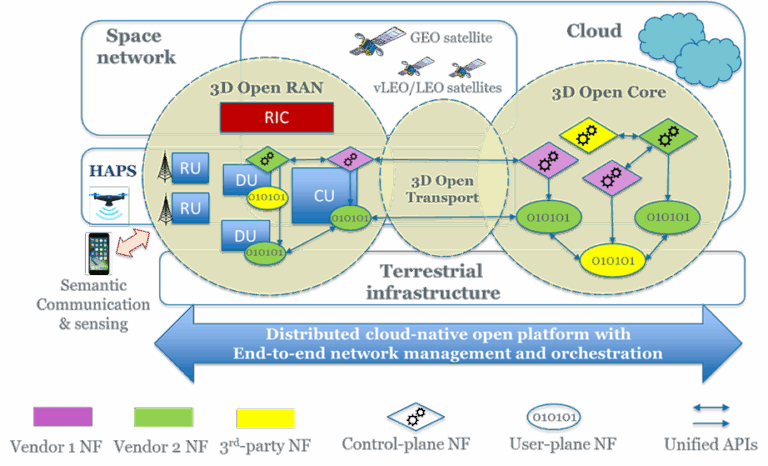
Within this consortium, StrathSDR played a central technical role in the area of spectrum monitoring and spectrum management. Our team led the project’s spectrum related workstream, contributing research and a prototype essential to enabling shared-spectrum operation across integrated terrestrial and non-terrestrial networks. We developed an agile RF sensing and spectrum monitoring platform capable of sampling signals from both terrestrial and satellite-allocated mobile bands, providing the project with a practical mechanism to observe real-world spectrum behaviour across the 3D network environment. This prototype formed part of TUDOR’s public demonstrations, including its presence at Mobile World Congress 2025, where Strathclyde showcased a live sensing and monitoring system for TN and NTN spectrum bands.
Beyond sensing, StrathSDR contributed to the design of an open spectrum management architecture for 3D networks, exploring how future systems could share spectrum flexibly across terrestrial and satellite operators. Our work examined requirements for new spectrum-sharing models, spectrum access mechanisms, and cognitive behaviours appropriate for 6G-class systems in highly dynamic environments. This effort aligned with TUDOR’s broader architectural vision, which emphasised openness, disaggregation and interoperable service-based design throughout the RAN and core.
StrathSDR also participated across architecture and integration discussions, engaging in weekly technical meetings for the main architecture and system-integration work packages. Through these interactions, our contributions helped shape the consortium’s views on spectrum openness, RF sensing callability, and how spectrum intelligence should interact with higher-layer orchestration, mobility management, and NTN integration. The TUDOR demonstrations validated many of these concepts across use cases such as high-speed rail, emergency services, cloud-native media delivery, and flexible NTN-assisted coverage extension.
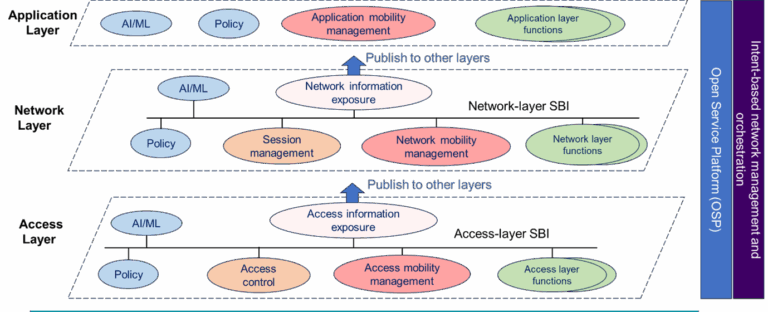
Overall, TUDOR demonstrated credible architectural and technical solutions for integrating terrestrial and non-terrestrial networks within open, disaggregated 6G-ready systems. StrathSDR’s work in spectrum monitoring and management formed a key part of that vision, contributing both practical implementation and forward-looking architectural insights that will inform future research projects, sustainability plans, and engagement with emerging international standards.