

Modern private 5G networks face unpredictable RF environments, especially during large-scale events where interference and spectrum congestion change rapidly. ON-SIDE addresses this by developing real-time spectrum sensing and dynamic spectrum access capabilities, enabling networks to monitor, adapt, and respond to their environment as conditions evolve.
ON-SIDE (Open Networked Shared Spectrum Innovation and Design Environment) is a DSIT funded research and innovation project bringing together Cisco, Neutral Wireless, the University of Strathclyde, AMD, the BBC, the University of Glasgow, Glasgow City Counsel, Logicalis, and Scottish Wireless to advance the future of private 5G networks. As a key technology contributor, StrathSDR worked within this consortium to develop and demonstrate new approaches to spectrum awareness, Open-RAN interoperability, and intelligent radio design.
The project investigates how open, programmable, and flexible 5G systems can operate reliably in complex real-world environments, particularly during large events where RF conditions can shift quickly and unpredictably. By combining multi-vendor Open-RAN infrastructure with intelligent control systems and advanced spectrum-management tools, ON-SIDE provides a blueprint for more resilient, adaptive, and spectrum-efficient connectivity.
A central theme of the project is improving how private 5G networks understand and respond to their surrounding RF environment. Real-time spectrum awareness is essential in scenarios such as major sporting and cultural events, where thousands of user devices can dramatically alter interference and spectrum availability. ON-SIDE demonstrates how integrating this awareness into an open, standards-based architecture can enable smarter, more reliable wireless deployments.
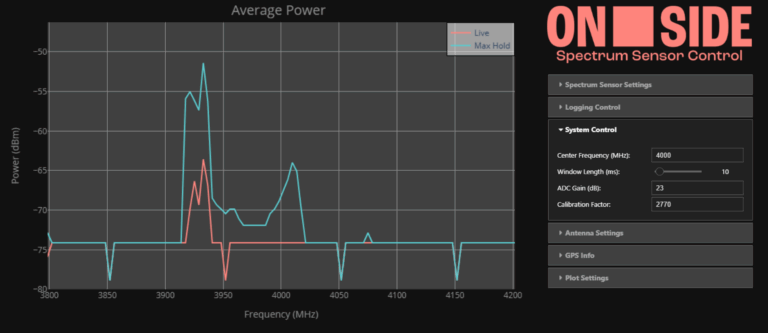
StrathSDR played a leading role in delivering the project’s spectrum-intelligence capabilities. We designed and developed the real-time spectrum sensing framework that allowed deployed radios to monitor shared-spectrum activity and build a live picture of the RF environment. This capability proved critical to understanding how spectrum behaves under real-event conditions and supported more informed network operations. Building on this foundation, we integrated the sensing system into a Dynamic Spectrum Access (DSA) workflow, demonstrating how live RF measurements can support automated spectrum management and help shape future regulatory approaches to shared-spectrum use.
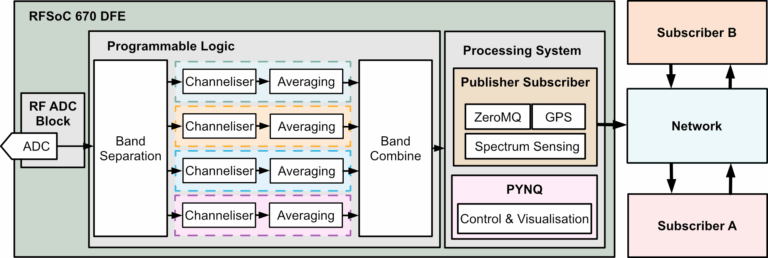
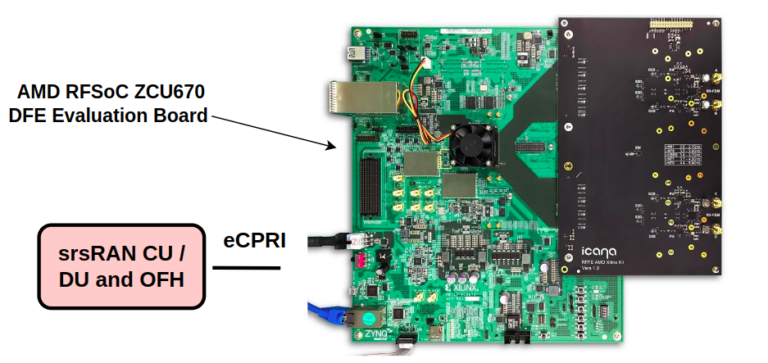
In parallel, StrathSDR developed an O-RAN-compliant 7.2 split Radio Unit (RU) using the AMD RFSoC platform, enabling open interfaces and multi-vendor interoperability across ON-SIDE’s deployment architecture. Our team also supported field trials and live demonstrations, ensuring the technology was validated under real-world conditions where RF environments are highly dynamic and unpredictable. These demonstrations, highlighted the value of combining Open-RAN principles with real-time spectrum intelligence to enable more resilient and adaptable private networks.
Together these contributions show how StrathSDR helped to shape ON-SIDE’s demonstration of next-generation private 5G capabilities. The project highlights a clear pathway towards more adaptive, efficient, and robust shared-spectrum deployments, and reflects StrathSDR’s continued role in driving the technologies that will underpin future wireless standards and operational networks.
Want to learn more about the ON-SIDE project and its partners?